Category: India

  • Why I Enjoy Long-Distance Driving?

    Why I Enjoy Long-Distance Driving?

    Long-distance driving is often spoken about in terms of endurance, efficiency, or necessity. How fast can you get there, how tired will you be, and whether it is worth the effort at all. For me, the appeal has always been different.

    This is not about preferring roads over flights, or about chasing distance for the sake of it. It is about what happens to the mind when conditions are right, when the road opens up, the pace settles, and driving stops feeling like a task and starts feeling like a state you naturally slip into.

    This piece is a reflection on why that experience has stayed with me over the years, across bikes and cars, and why, even today, I still enjoy long-distance driving when everything aligns.

    1. It started long before the driving did

    For many of us, the love for driving did not begin behind the wheel.

    It began much earlier, standing by the roadside.

    Growing up, cars and bikes were objects of fascination long before they were objects of ownership. The Ambassador and the Premier Padmini were part of everyday life, familiar and dependable. The Contessa, though, stood apart. It looked different, felt aspirational, and carried an aura that made you turn your head when one passed by.

    Then there were the rarities. The occasional Mercedes or imported car on Indian roads, sightings so infrequent that they became stories. You remembered where you saw them, who you were with, and how long you stared.

    On two wheels, the pull was just as strong. Ind-Suzuki, Yezdi, Jawa, Rajdoot, Royal Enfield, each had a distinct personality. They were not just machines, they were statements.

    What the roads showed us was only part of the picture. Magazines completed it.

    Autocar, Car India, and others opened a window into a world far beyond our reach. Ducati, KTM, Porsche, Jaguar, Ferrari, Alfa Romeo, MV Agusta, names that felt almost mythical at the time. We memorised specifications, studied photographs, and imagined roads we had never seen.

    Driving and riding were always on our minds, even if ownership was constrained by reality, by family priorities, and by what our fathers could afford or were willing to buy.

    I had those dreams too.

    When I finally earned enough, and was willing to borrow from the bank along with it, my first serious step into that world came on two wheels. I bought a Royal Enfield Himalayan. The rides were short at first, 100 to 150 kilometres, weekend escapes rather than expeditions.

    When the opportunity came, I took it further, riding from Mumbai to Kerala. That journey marked the moment riding stopped being an idea and became a lived experience.

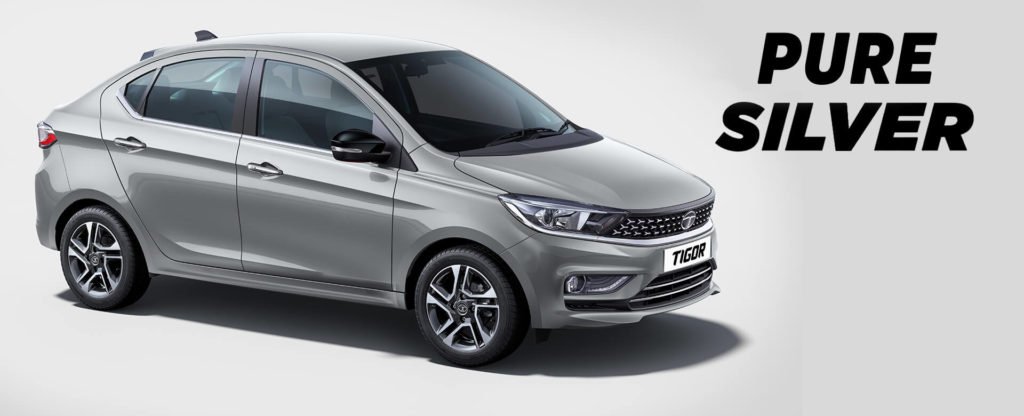
    The transition to four wheels followed naturally. My first car, the Tata Tigor, saw similar patterns. Short trips initially, a few longer ones later, learning comfort, endurance, and pacing over time.

    Then the world changed.

    During COVID, when flying felt uncertain and unsafe, the road became the only viable option. What began as necessity turned into revelation. A 3,400-kilometre round trip to Kerala, completed over four days, and then repeated again within three months, reset my understanding of distance entirely.

    Since then, long drives have become a recurring part of my life.

    Not because I am chasing nostalgia, but because somewhere along the way, I realised that what fascinated me as a child was never really about speed or machines. It was about movement, continuity, and the quiet satisfaction of covering ground at your own pace.


    2. Rhythm, not distance, is the real attraction

    What draws me to long-distance driving has very little to do with how far the destination is.

    Distance is measurable. Rhythm is not.

    A long drive settles into a cadence that shorter journeys never quite reach. After the initial phase, when traffic thins and the road opens up, something shifts. Decisions become fewer but more meaningful. Speed stabilises, inputs become lighter, and attention stretches out instead of jumping between tasks.

    This rhythm is what makes the experience enjoyable.

    It is not about being fast. Chasing speed often breaks the flow. What works instead is continuity, a steady pace, predictable progress, and the sense that time is moving with you rather than against you.

    There is a mental clarity that comes from sustained motion. Long drives allow the mind to remain engaged without being overstimulated. You are alert, but not anxious. Focused, but not rushed.

    Music helps. So does silence.

    Some stretches pass with a playlist running quietly in the background. Others unfold without any sound at all, just the road, the engine note, and the awareness of what lies ahead.

    Once you settle into that continuity, distance becomes incidental.


    3. What the mind does when you’re long distance driving

    When I’m driving on a highway, my mind is never blank, but it is also never cluttered.

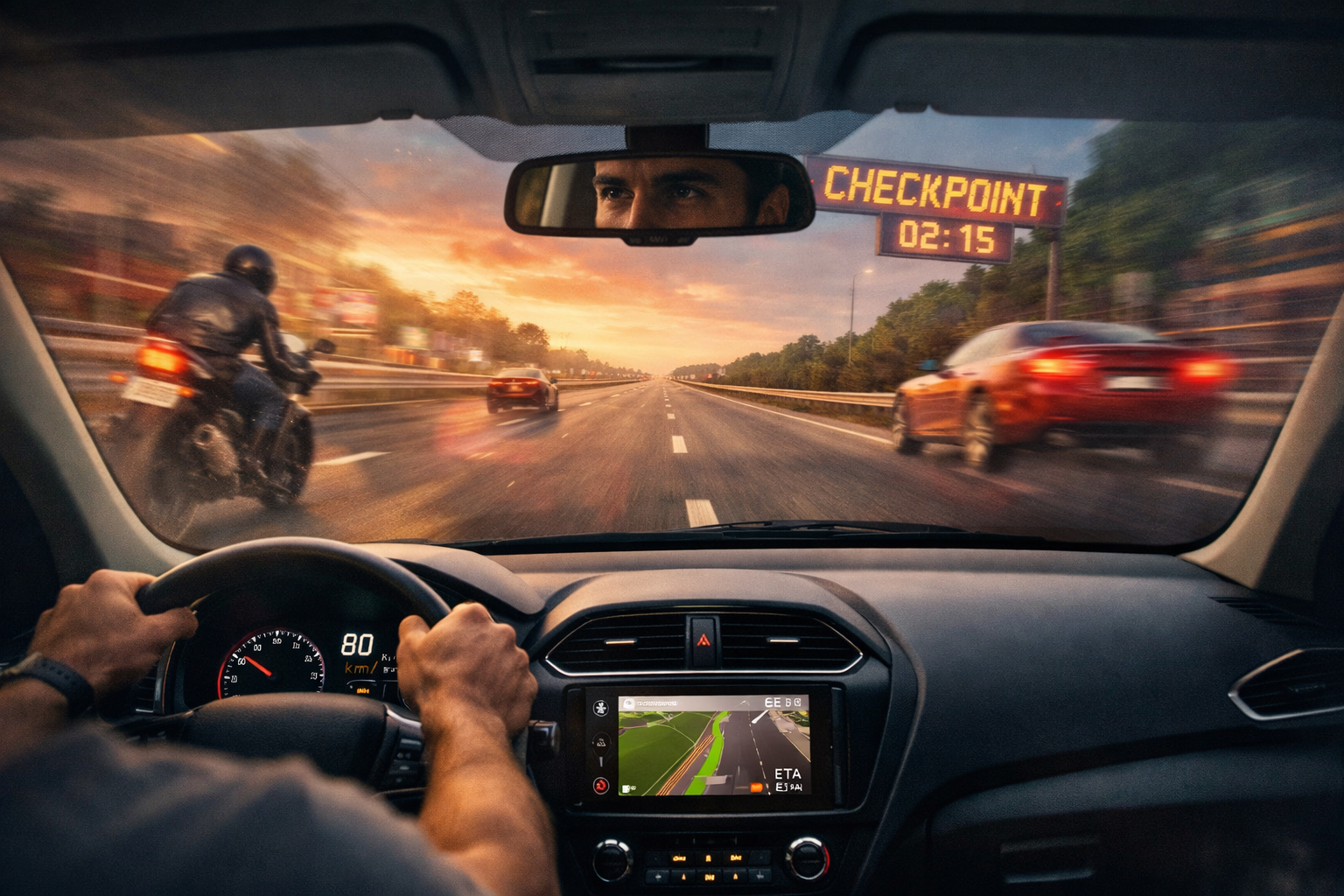
    There is a constant stream of small calculations happening in the background. At this speed, can I move across lanes safely? Can I slot between those two trucks ahead without forcing anyone to brake? If the car in front hesitates, where do I go next? Which lane will open up first, and which one will choke a few kilometres ahead?

    None of this feels stressful. It feels absorbing.

    There is also an unspoken conversation with Google Maps running alongside it. The ETA sits there, not as pressure, but as a reference point. You don’t obsess over it, but you glance at it occasionally, wondering if holding this pace for the next stretch will shave a few minutes off. Not to beat it aggressively, but to see how your decisions influence the outcome.

    That loop is strangely familiar.

    In some ways, it feels no different from the hours spent playing Road Rash or Need for Speed as a kid. Reading the road. Anticipating what’s coming next. Timing your moves. Knowing when to push and when to hold back.

    The highway brings that same mental state back, just translated into reality.

    Your hands, eyes, and mind are aligned. You are fully present, but not overwhelmed. There is no space left for background noise because the road has already claimed that attention.

    This is why long-distance driving never feels like dead time.

    It is active engagement without emotional weight. Focus without friction. A continuous feedback loop between observation and action that feels satisfying the longer it goes on.

    I’ve written earlier about some of my long-distance drives, including a detailed account of driving across states in a compact sedan, which adds real-world context to these reflections, and some of the long ride videos on my YouTube channel, IndianomicsTV.


    4. Why this doesn’t work for everyone

    The same things that make long-distance driving enjoyable for me are precisely the reasons it doesn’t work for everyone.

    Not every mind enjoys sustained focus. Not everyone finds comfort in continuously reading traffic, predicting movement, and staying mentally engaged for hours. For some, that level of attention feels draining rather than absorbing.

    There is also no single definition of rest.

    For many people, rest means disengaging, switching off, letting someone or something else handle the process. In that context, long drives can feel like work, not relaxation.

    Enjoying long-distance driving is not a marker of skill or toughness. It is simply a matter of temperament.

    Some minds enjoy continuous, low-grade problem-solving. Others prefer discrete bursts of effort followed by complete disengagement.

    Neither is better. They are just different.


    5. A quiet ending

    I don’t enjoy long-distance driving because it is efficient, or faster, or somehow superior.

    I enjoy it because it gives my mind something meaningful to do.

    The road asks for attention, but not urgency. It rewards awareness, not aggression. Over long stretches, that exchange settles into a rhythm that feels familiar and comforting.

    This isn’t something I try to explain or recommend anymore. People either recognise this feeling instantly, or they don’t.

    For me, the enjoyment has stayed constant across bikes and cars, across different roads and different phases of life. What began as childhood fascination slowly turned into something more grounded, a space where focus feels natural and movement feels intentional.

    When conditions are right, the highway becomes less about reaching somewhere and more about being fully present while getting there.

    That’s all it needs to be.

  • Mumbai to Hyderabad Road Trip in a 7.5-Year-Old Tata Tigor

    Mumbai to Hyderabad Road Trip in a 7.5-Year-Old Tata Tigor

    Long-distance highway driving in India is usually discussed at two extremes. On one end, you have glossy road-trip narratives built around new cars, wide highways, and ideal conditions. On the other, you have anxious forum posts questioning whether a particular car is “capable” of doing a long drive at all. Real-world ownership lives somewhere in between, as I discovered in this Mumbai to Hyderabad road trip.

    Introduction: Why this drive deserved to be written about

    This Mumbai to Hyderabad road trip was done in a 7.5-year-old Tata Tigor during peak holiday season, with real traffic, real fatigue, and no attempt to optimise conditions, inconsistent road discipline, and no attempt to optimise for Instagram-friendly outcomes.

    It was not planned as a statement drive. It happened because flying suddenly stopped making economic sense, return dates were unclear, and driving offered control, flexibility, and predictability that air travel did not.

    What followed was not a flawless highway experience, but a revealing one.

    This article is not about the destination. It is about what actually happens when you ask an ageing, well-maintained petrol car to cover serious distances on Indian highways, and what matters far more than horsepower, ground clearance, or badge value when you do so.


    1. Context, the car, and why this drive mattered

    The trigger for this drive was cost.

    A one-way Christmas flight from Mumbai to Hyderabad was quoting around to ₹20,000 per person, for a route that usually costs around ₹4,500. With two people travelling, that meant nearly ₹40,000 one way, and with unclear return dates, booking flights made little sense.

    At that price point, driving stopped being a romantic choice and became a rational one.

    The car for this journey was my Tata Tigor AMT, purchased new in 2018 and still largely stock. The intent was not to prove endurance or heroics, but to answer a simpler question:
    Can an ageing compact sedan still handle a serious intercity drive without turning it into a stressful affair?

    Facts for the Nerd in you

    Here is a full set of information about the car, fuel and distance for those who are interested. Click here to show/hide.
    Car Profile
    CarTata Tigor AMT (Petrol)
    Year of Purchase2018
    Age at Time of TripApproximately 7.5 years
    Engine1.2L Naturally Aspirated Petrol
    TransmissionAMT
    State of TuneStock (no performance modifications)
    Driving Modes Used~95% Sports mode, City mode only in bumper-to-bumper traffic
    Odometer & Usage
    Odometer Before Trip115,314 kms
    Odometer After Trip116,791 kms
    Total Distance Covered (Round Trip)1,477 kms
    Pre-Trip Preparation
    Tyre ValvesRubber valves replaced with metal valves (puncture-fraud avoidance)
    Wheel Alignment & Tyre RotationCompleted before the trip
    TyresVredestein 15-inch (installed ~40,000 km prior)
    SuspensionReplaced earlier in 2025
    Trip Overview
    RouteMumbai ⇄ Hyderabad
    Distance (One Way)Approximately 710–720 km
    Outbound Start Time3:00 pm (Christmas Day)
    Outbound Duration12 hours 39 minutes (including breaks)
    Return Start Time2:00 pm (3rd January 2026)
    Return DurationApproximately 14 hours 20 minutes
    Fuel & Efficiency
    Fuel Types UsedShell V-Power, Shell Regular, Jio BP Petrol, HP (fallback only)
    Fuel StrategyPrioritised fuel quality consistency over price
    Mileage Calculation MethodFull-tank to full-tank (MID not relied upon)
    Observed Real-World Efficiency13.8 Kmpl, Mid-teens kmpl under mixed traffic and long-distance conditions was showing between 15.5 to 19.9 at various stages
    Road & Driving Conditions
    MaharashtraPoor lane discipline, diversions, trucks and buses occupying right-most lanes
    Karnataka & Andhra PradeshSmoother surfaces, better lane behaviour, easier sustained cruising

    2. The car, age, condition, and realistic expectations

    This was not a casual “let’s see how it goes” drive. Some deliberate pre-trip actions were taken to reduce avoidable risks.

    Before the trip:

    • Rubber tyre air refill valves were replaced with metal valves, primarily to avoid puncture-related fraud or valve damage at roadside tyre shops

    • Wheel alignment and tyre rotation were completed

    • Suspension had already been replaced earlier in 2025

    • Tyres were Vredestein 15-inch, installed roughly 40,000 km prior to the trip

    During the drive:

    • Approximately 95 percent of the drive was done in Sports mode

    • City mode was used only during bumper-to-bumper traffic

    On highways, Sports mode reduces AMT indecision, keeps the engine better engaged, and makes throttle response more predictable, especially during overtakes. Over long distances, this directly reduces mental fatigue.

    Expectations were realistic. A 7.5-year-old compact sedan is not meant to feel effortless. The benchmark here was stability, predictability, and the absence of anxiety.


    3. Route, timing, and why timing mattered more than expected for your Mumbai to Hyderabad road trip

    The outbound leg started at 3:00 pm on Christmas Day, after my spouse returned from church.

    This immediately proved to be non-ideal.

    Traffic around Lonavala and Pune was severe, with holiday congestion delaying progress by 2 to 3 hours early in the drive. Even after crossing Pune city limits, smaller vehicles like bikes and auto-rickshaws kept interrupting flow, preventing consistent cruising speeds.

    The return leg began at 2:00 pm, with an expectation that traffic would thin out later in the night. That assumption only partially held.

    Despite late-night hours:

    • Pune still had noticeable traffic close to midnight

    • Multiple road diversions disrupted flow

    • Truck density increased significantly post-midnight

    The idea that highways automatically clear out at night does not hold true on this route, especially around major urban and logistics corridors.


    4. Drive hours, breaks, food, and fatigue management

    Break planning was consistent on both legs, roughly every 90 to 120 minutes, but execution differed.

    On the outbound leg:

    • Breaks were shorter and functional

    • Food was a mix of café stops and home-cooked meals eaten inside the car

    • The focus was on maintaining momentum despite early delays

    Key early stops included:

    • The food court near Khalapur Toll Plaza, with coffee and snacks

    • Multiple fuel stops for bio breaks

    • A tea stop just before Indapur, after which traffic thinned considerably and pace improved

    On the return leg, breaks were longer and more relaxed, which increased total drive time but improved physical comfort.

    A special mention is due to the Fairfield Marriott team, who thoughtfully packed cut fruits and pastries for the journey. Combined with home-packed food from a friend’s family, this removed the need to hunt for food late at night and materially improved the return-drive experience. These small operational gestures make a disproportionate difference on long highway runs.

    One consistent frustration on both legs was coffee availability. Jio BP stations did not have Wild Bean cafés, and reliable options were scarce late at night. Shell fuel stations turned out to be the most dependable for a proper hot cup of coffee.


    5. Time on road, distance, and what the numbers actually say about your trip from Mumbai to Hyderabad

    The outbound Mumbai to Hyderabad leg took 12 hours and 39 minutes, including all breaks, over a distance of approximately 710–720 km.

    The return leg took longer:

    • Start time: 2:00 pm

    • Arrival time: 4:20 am

    • Total duration: just over 14 hours

    The reasons were cumulative:

    • Longer, more relaxed breaks

    • Persistent traffic around Pune even late at night

    • Road diversions

    • Heavy truck movement across all lanes

    A particularly frustrating aspect was lane discipline. Trucks, tempos, and buses frequently occupied the right-most lane at around 60 kmph, including on the expressway. This forced constant speed modulation and increased mental fatigue, despite otherwise decent road surfaces.

    For good measure, I also purchased the Annual toll pass by NHAI that saves on the cost for the entire years future drives.


    6. Fuel efficiency, fuel choice, and real-world behaviour

    Fuel choice for this drive was intentional.

    Across both legs, I used a mix of:

    • Shell V-Power

    • Shell regular petrol

    • Jio BP petrol

    • HP pumps, only when Shell or Jio BP were unavailable

    This was less about price and more about fuel quality consistency. From long-term ownership experience, Shell and Jio BP have delivered more predictable engine behaviour than legacy PSU pumps. On a naturally aspirated petrol engine paired with an AMT, that predictability matters.

    Fuel efficiency was calculated using full-tank to full-tank logic, not MID readings.

    Why this matters:

    • MID typically shows a deviation of ~1.5 to 2.5 kmpl

    • Long idling and traffic distort averages

    • Tank-to-tank remains the most reliable method

    Despite traffic delays, idling, and long hours, the car delivered 13.8 Kmpl, Mid-teens kmpl under mixed traffic and long-distance conditions was showing between 15.5 to 19.9 at various stages

    The more important takeaway was not the number itself, but this:
    there was zero range anxiety, no unexpected drop-offs, and no change in engine behaviour even after long continuous stints.

    For reference, here’s a snapshot of the MID during the drive. While I do not rely on MID figures alone, it helps establish directional consistency.

    Tata Tigor MID display during Mumbai to Hyderabad road trip showing trip distance and average fuel efficiency
    Instrument cluster and MID display of a Tata Tigor during a long-distance Mumbai to Hyderabad road trip, showing trip distance, average fuel efficiency, and driving mode. Used as a real-world reference alongside tank-to-tank fuel calculations.

    7. Road quality, stress, and comfort as you drive to Hyderabad from Mumbai

    Road quality played a decisive role in how this drive felt.

    Within Maharashtra, inconsistent surfaces, diversions, and poor lane discipline acted as constant stress multipliers. Even when the car was capable, the environment did not allow it to settle into a calm cruising rhythm.

    The moment we crossed into Karnataka and later Andhra Pradesh, the contrast was immediate:

    • Smoother surfaces

    • Minimal undulations

    • Predictable lane behaviour

    Despite being the same National Highway on paper, execution quality was dramatically better, in some sections even better than parts of the Mumbai–Pune Expressway.

    This directly translated into:

    • Sustained cruising at 100–120 kmph

    • Lower cabin stress

    • Reduced mental fatigue

    The lesson was clear: road quality and discipline influence comfort far more than vehicle segment or age.


    Conclusion: What this drive really proved?

    This drive did not prove that everyone should start doing 700+ km highway runs in compact sedans.

    What it did prove is more uncomfortable.

    A well-maintained, 7.5-year-old petrol car is not the weakest link on Indian highways. More often than not, the weakest links are road quality, traffic discipline, and governance.

    The car did its job.

    • It cruised when roads allowed it

    • It delivered predictable fuel behaviour

    • It introduced no mechanical anxiety

    • It handled long hours without falling apart

    The stress came from elsewhere.

    From broken surfaces that have no business existing on a National Highway.
    Trucks occupying the right-most lanes at 60 kmph add to the stress.
    Diversions appear without warning and linger indefinitely.
    And the stark contrast in execution quality becomes obvious the moment you cross state borders.

    This is not a car problem. This is a governance problem.

    We are quick to recommend bigger engines and bigger cars for highway comfort. Far less attention is paid to the fact that consistent roads and enforcement reduce fatigue more than any vehicle upgrade ever will.

    If this drive proved one thing, it is this:
    You don’t always need a new car to do long drives.
    You do need better roads, better discipline, and better accountability.

    List of pitstops with links where possible. 

  • The Real Cost of Owning a Tata Tigor After 6 Years and 1 Lakh KM

    The Real Cost of Owning a Tata Tigor After 6 Years and 1 Lakh KM

    When I bought my Tata Tigor XZA back in 2018, I knew I wasn’t just getting a car. I was getting a co-pilot for long drives, a daily warrior for the home-to-office grind, and a companion that would get to know more potholes than I ever cared to count. Not to mention, the horrific Mumbai traffic that not only wastes a lot of time but also costs a lot of money.

    Fast forward to 2025, and we’ve officially crossed 1,04,500 kilometers together. That’s like circling the Earth… twice. So here it is. A brutally honest, real-world breakdown of what it really costs to own a Tata Tigor over six years.

    Hemal driving the new Tata Tigor in 2017
    Hemal driving the new Tata Tigor in 2017

    🔧 Maintenance: Not Always Peace of Mind

    Poor roads are still a norm in what is called the Financial Capital of India. Mind you, this is what a tax-paying citizen gets in return — paying about 30% of income as tax, and then another 55% on already taxed money in the form of fuel tax. It’s a bit of a joke, really, and not a very funny one. Bad roads break parts faster, and this is just everyday reality.

    Over the years, the Tigor has seen its fair share of breakdowns and replacements:

    • Suspension: Needs replacement again due to harsh road conditions. Delayed because I’m still weighing cost versus durability.
    • Brakes: Rear drums resurfaced, fronts upgraded to discs.
    • Battery: Replaced 1.5 years ago and doing well.
    • C-Mount: Broke again after earlier replacement. Probably a mix of poor part quality and my pothole-filled commute.

    🛠️ Service Center Adventures

    One of the major reasons I’ve hesitated to upgrade to another Tata car is the service center experience.

    I used to rely on CREST, where I always had a great experience. But ever since they shut shop, it’s been hit or miss with WellWisher Motors, the newer Authorized service centre. 

    Some of the issues I’ve encountered:

    • Fog lamps stopped working after they opened up the front to fix the C-Mount.
    • A wire left dangling under the passenger seat.
    • The A/C heater stopped functioning right after they serviced the A/C.

    Every visit is a new mystery to solve.

    ⛽ Fuel & Running Costs

    Let’s talk fuel. It’s been one of the biggest ongoing expenses with this car.

    • Monthly fuel spends: ₹12,000 – ₹13,600
    • Commute: My daily commute averages around 70 km, with tolls adding to the cost. Of course, since the Maha elections, the tolls do not exist anymore, so saving close to ₹2,000 per month now. (Sigh!)
    • Mileage: The mileage I get is around 11 to 13 kmpl in city traffic, and 16+ on highways — provided traffic gods are in a good mood.

    To reduce cost, I carpool weekly using S-Ride, which brings in about ₹300–₹500 weekly on an average. That helps, especially when fuel prices swing like mood swings in a soap opera. Definitely helps take the edge off.

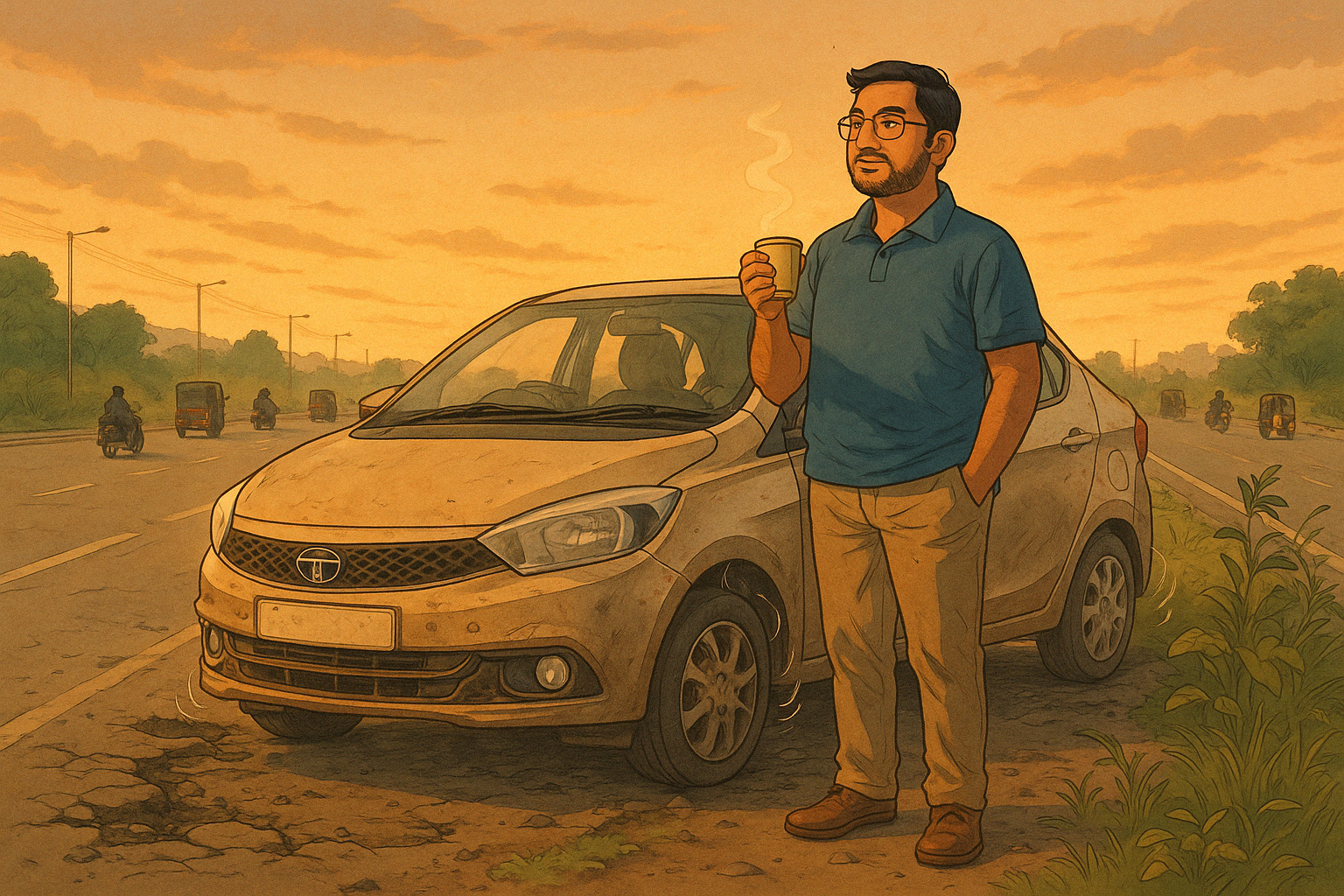
    Picture of a well-traveled Tata Tigor parked on the highway
    Picture of a well-traveled Tata Tigor parked on the highway

    ⚙️ AMT Woes

    I went in knowing this wasn’t a fully automatic, and that’s fine. But I didn’t expect the AMT to jerk so often in slow-moving traffic. It’s manageable once you understand it, but far from smooth.

    Back in 2018, this was the most affordable “automatic” option available. Given the choices then, I still think it was the right call. I plan to get the settings recalibrated — once I find a trustworthy service partner.

    🛞 Tyres & Road Grip

    I switched to Vredestein Ultrac 185/60 R15 84V from Continental CC5, and I’m impressed. The new set has clocked 30,000 km and still has 10,000–15,000 km of life left. Excellent grip and control on highways, I actually enjoy driving more now, and it indeed offers lower road noise to creep into the car.

    Vredestein Ultrac that I got for my car now.
    Vredestein Ultrac that I got for my car now.

    The old CC5s I had were not as impressive as I have had fellow Tigor owners suggest or experience, even though I had verified the date of manufacture before I got those. Another option was to consider the BridgeStone B250, however I was worried about the tyre noise from my previous experience with the make.

    For some reason, Vredestein has actually performed much better. I got all four replaced at the same time for ₹22,000 – similarly priced to CC5s back then.

    The new CC6 is being said to be an evolution and is better, however given my experience with Vredestein, I may decide to stick with it when it comes to replacement. Who knows?

    💰 Ownership Cost: Let’s Talk Numbers

    If you’re wondering what all this love-hate relationship with the Tigor has cost me, here’s the breakdown:

    I paid ₹7,36,000 when I bought the car brand new in 2018. That included the first year of insurance and a few practical upgrades — reverse parking camera with LED screen, side skirts, bumper protectors, puddle lamp, window visors, and Tata’s LEAP program, which gave me extended warranty coverage for up to 4 years or 60,000 km.

    Over the years, I’ve spent approximately:

    • ₹7,20,000 on fuel

    • ₹75,000 on repairs and maintenance

    (That fuel number includes a ₹20,000 buffer for those months I forgot to tag expenses in Drivvo.)

    So the total cost of ownership comes up to around ₹15,28,000.

    That’s the price of six years, 1 lakh+ kilometers, many memorable road trips, and quite a few chai breaks.


    ✅ Verdict: Still Worth It?

    Yes, absolutely.

    Despite its quirks, the Tigor has delivered. It’s been with me through road trips, rush hours, late-night drives, and hasn’t quit. Sure, the AMT could be smoother, and the service network needs serious work, but the car itself? Solid.

    Would I buy it again? Probably. I even considered the iCNG version, which remains the only automatic CNG car in India.

    So, if you’re considering a Tigor, go in with your eyes open and expectations realistic. It’s a good choice for practical buyers.


    💬 What Do You Think?

    Got questions about the Tigor? Thinking of buying or upgrading? Drop your questions and experiences in the comments or reach out to me on X (Twitter) @indianomicstv. I’d love to hear your stories too.

    IndiBlogger - The Indian Blogger Community

  • GPRO Racing Strategy: Why is my Q2 time slower?

    GPRO Racing Strategy: Why is my Q2 time slower?

    This is the number one question I get asked by new managers: “Hemal, I smashed Q1, but my Q2 time was 2 seconds slower! What happened?”

    Relax. You didn’t break the car. You just discovered the Fuel Load Trap.

    The Difference

    • Qualifying 1 (Q1): This is your glory run. The car runs on low fuel (fumes, basically). You push hard here to prove raw speed.

    • Qualifying 2 (Q2): This is the reality check. You are carrying your starting race fuel. Of course, you are slower—you are carrying 60+ liters of petrol!

    The “Locked Setup” Hazard Here is the part that ruined my first season. In GPRO, the setup you choose for Q1 is LOCKED for Q2 and the Race.

    • If you set up your car purely for a “glory run” in Q1 (aggressive wing angles, crazy gear ratios), you might grab pole position.

    • BUT, that same aggressive setup will likely destroy your tyres or engine during the 300km race.

    My Strategy I now sacrifice a bit of Q1 speed for Race stability. I set my car up for the Race first. I use the practice laps to find a setup that is kind on tyres and fuel. I use that setup for Q1. I might qualify 5th instead of 1st, but I’ll actually finish the race while the “Pole Position Hero” retires with a blown engine on Lap 20.

    Learn more about GPRO Driver Feedback, or how to select tyre.

  • Amazon Finds for a Memorable Christmas and New Year in 2023

    Amazon Finds for a Memorable Christmas and New Year in 2023

    As the festive spirit envelopes, us in the waning days of December, my daughter and I find ourselves immersed in the delightful world of online shopping, navigating the vast expanse of Amazon in search of the perfect gifts to celebrate Christmas and welcome the dawn of a promising New Year in 2023. In the age of technology, our quest for presents has taken an exciting turn towards the realm of smart devices and innovative gadgets, promising to add a touch of modernity to our holiday celebrations.

    The glow of twinkling lights and the warmth of holiday decorations provide a backdrop to our virtual journey through the myriad options available at our fingertips. The allure of smart home devices, cutting-edge gadgets, and the latest in technological marvels beckons, promising not only convenience but a sense of wonder that aligns perfectly with the enchantment of the holiday season.

    1. Nothing better than Gift Cards

    While gifting can be complicated choice, it is often better to gift a prepaid voucher, or buy a gift card that enables the receiver to buy whatever they want. This gives them a choice, though the chance they would make a memory is pretty low. Gift cards serve a purpose; however, you must only use them when you are unable to identify a good enough gift for your loved one.

    A Gift Card in the hands of a man, who is looking at a MacBook at his desk
    A Gift Card in the hands of a man, who is looking at a MacBook at his desk.

    Buy now

    2. Best and affordable useable gift for Children

    When it comes to picking out gifts for kids, the options are endless. However, one common issue is that many of these gifts turn out to be one-shot wonders, only to be discarded or thrown away once the holiday excitement fades. In light of this, we stumbled upon a delightful alternative – these adorable glass cups.

    Glass Coffee Mug - Christmas Theme Rudolf
    Glass Coffee Mug – Christmas Theme Rudolf

    Not only are they see-through, but they also feature a charming Rudolf illustration, making them a fantastic and reusable gift for the little ones. Imagine sipping hot cocoa or enjoying a cold drink in these charming glasses, creating lasting memories that go beyond the holiday season. It’s a simple yet thoughtful choice that adds a touch of practicality to the joy of gift-giving.

    Buy now

    3. Drape your walls in the festive spirit

    Transform your living space into a festive haven by embracing the timeless charm of decorative ribbons. These whimsical strands of color and texture have the power to infuse your walls with the joyful spirit of the season. Whether you choose traditional holiday hues or opt for a modern twist with metallic tones, the versatility of decorative ribbons allows you to unleash your creativity. Drape them along door frames, let them cascade gracefully from the ceiling, or fashion them into eye-catching bows—each arrangement tells a unique story of celebration. The simple yet effective touch of these ribbons not only adds a visual delight to your surroundings but also encapsulates the magic of the holidays, creating a warm and welcoming atmosphere that resonates with the joy of the festive season.

    Christmas Ribbon Xmas Ribbon Fabric Decoration
    Christmas Ribbon Xmas Ribbon Fabric Decoration

    As you weave these decorative ribbons into your holiday decor, you’re not just enhancing the aesthetics of your home; you’re crafting an immersive experience that captures the essence of celebration. The tactile pleasure of handling the ribbons, the gleam of their reflective surfaces, and the playful dance of colors all contribute to an environment that radiates warmth and merriment. So, let your creativity run wild as you drape your walls in these festive embellishments, turning every corner of your home into a canvas for holiday cheer. It’s a simple yet effective way to make your living space come alive with the magic of the season, ensuring that every glance at your adorned walls brings a smile and a sense of festive enchantment.

    Buy now

    4. Glass Orb Lights with Candles

    Elevate your home’s festive decor to new heights by considering the enchanting addition of circular orbs this Christmas. These captivating orbs, available in various sizes and finishes, can be strategically placed around your living space to create a whimsical and magical atmosphere. Imagine them suspended from the ceiling, gently illuminating your room with warm, ambient light. Whether you opt for classic white orbs for a timeless look or experiment with vibrant, multicolored options to infuse a playful spirit, these circular ornaments add a touch of elegance to your Christmas celebration. Their versatility allows you to incorporate them into existing decorations, turning your home into a radiant haven that resonates with the joy and warmth of the holiday season.

    Glass Orbs Candle Lights
    Glass Orbs Candle Lights

    Investing in circular orbs for your Christmas celebration not only enhances the visual appeal of your home but also introduces an element of charm and sophistication. The soft, diffused light emitted by these orbs creates a cozy and inviting ambiance, perfect for gatherings with family and friends. Whether arranged in clusters as a centerpiece or strategically placed around the room, these orbs become a focal point that captures the festive spirit. So, as you embark on your holiday decorating journey, consider the addition of these circular delights to infuse your home with a timeless and joyous glow that embodies the essence of Christmas.

    Buy now

    There are many more, that we will come up with as recommendations. Pleas subscribe for updates from us.

  • Your wallet is attacked by Petrol Tax!

    Your wallet is attacked by Petrol Tax!

    You are paying 200% tax on the petrol or diesel that you are buying. Believe it or not, it is actually true. 200% is indeed too much to think, but an Indian today buying fuel is paying this much amount of tax. This includes both for and against this government.

    The only tax that grew, year on year!

    India has famously avoided getting Petrol/Diesel as part of GST. Both Centre and States are responsible for it as they see it as a cash-cow that they can milk to the most. In a quasi-federal state set up that India has, the GST was always an exception.

    Source: Centre for Monitoring Indian Economy.
    The chart clearly shows that the Excise Duty is the only tax income for government that has grown.
    Source: Centre for Monitoring Indian Economy.

    Excise Duty is the only tax revenue that grew as compared to 2019 – which should be surprising given every other tax revenue has fallen due to the lock-down measures. But it is not. Because we know that Govt has been raising the taxes and cess on Petroleum fuels constantly.

    You are being taxed unfairly - A unmanned car at petrol pump
    You are being taxed unfairly – A unmanned car at petrol pump

    Deregulated Petrol Prices, an eyewash?

    Normally, the price of fuel after deregulation was linked to the Crude Oil prices. That has changed in the current regime. When the global prices started hitting the low, the Govt. instead of reducing the price, increased the taxes.

    They did what the Chinese do – take two steps forward, and take one step back. The excise duty on petrol was increased by ₹3 per litre in March. In the month of May, they again raised by ₹10 per litre. So much so that, today it stands at ₹32.98 per litre.

    Costliest Petrol in Asia?

    Petrol that you buy in Delhi ₹81.12 per Litre today is among the highest you pay for petrol in India. In Islamabad (PK), the price for a litre of petrol is ₹46.29, in Colombo (SL) it is ₹54.86, and in Kathmandu (NP) it is at ₹66.52.

    Nepal buys petrol from India, at half the cost you and me pay for a litre. That in itself is a clear indication of how unfair the prices are taxed. Even importing a car attracts only 60% to 100% duty, but you and me pay more than 200% taxes on Petrol.

    With COVID19, consumption sure has taken a hit given a lot of users are now working from home in the urban areas, while consumption of diesel has more or less is back to pre-Covid levels. The difference is marginal and indeed the govt of India is making a lot of money from the petrol taxes.

    The only hope is – it all be used for the right purposes.


  • Is switchable ABS in RE Himalayan BS6 changing definition of adventure?

    Is switchable ABS in RE Himalayan BS6 changing definition of adventure?

    Since the lockdown, it has been rather difficult to stay put. For a biker at heart, it is against my character. I take my Himalayan for grocery shopping or to buy milk when I can just walk to the nearest shop. It is a small window of opportunity to unwind, an adventure of a different kind.

    While threat from COVID has still not diminished, I request all readers to stay safe, wear a mask and always maintain social distance while out there on a ride.

    While being in the lockdown is not enjoyable, one of my favorite past-time has been to watch videos on YouTube, movies or series on Netflix/Amazon Prime/Hot Star etc. In doing so, I saw a series of the new Himalayan commercials that Royal Enfield has launched for Himalayan and it caught my eye and well, inspired me to write this article.

    Here is the playlist, do enjoy the micro-stories!

    With the advent of BS6 emission norms, I have been longing for a Himalayan with Interceptor engine. That is a long dream yet, and unconfirmed if that will happen at all. Meanwhile, we have the new BS6 Himalayan.

    What’s new on the BS6 Himalayan?

    Colors ahoy!

    When launched, the mighty Himalayan was launched in two colors – Snow White and Granite Black. While the motorcycle looked nice, with limited panel spaces it was no surprise that there were not many colors on the offer. Then, with the BS4 launch, Royal Enfield brought out the Sleet Grey.

    With BS6, Royal Enfield has given us two more colors to chose from, and named them rather interestingly. Apart from the Snow White, Granite Black and Sleet Grey, the new colors are Rock Red (Black and Red), Lake Blue (White and Blue), and Gravel Grey. Both Rock Red and Lake Blue are also the only two glossy colors. 

    Himalayan BS6 Compliant Engine

    As expected, this is perhaps a bit of a bummer but environmentally very important. With BS6, Himalayan has lost 0.2 horse power, and gained 5 Kgs. With the motorcycle already heavier from BS3 (183 KGs) to BS4 (195 KGs), and now further with BS6 weighing about 200 KGs (all Kerb weight).

    Hazard lamp switch is back baby!

    Royal Enfield Himalayan BS6 now comes (again) with Hazard lights switch
    Royal Enfield Himalayan BS6 now comes (again) with Hazard lights switch

    Something that I personally felt was a terrible miss from the BS4 edition, Hazard lamp switch is back in the BS6 edition. It is however not part of the instrument cluster as was in BS3 model. Instead, it is now in the place of the conventional headlight on-off switch which used to exist before AHO was mandated. Though it may be a very small addition, it has a greater emphasis when you consider safety.

    I will reiterate to people, you should not switch them on while riding and only use it when one is in a unfortunate situation. It’s purpose, globally across motorcycles and cars, is to alert people around you that your motorcycle or car has a problem.

    Other tit-bits

    While the earlier three are bigger improvements, Royal Enfield has managed to improve a lot of small things as well.

    Side panels don't have Himalayan embossing anymore, and screams out Himalayan in stickers (just like many who modified it to that look since BS3 era)
    Side panels don’t have Himalayan embossing anymore, and screams out Himalayan in stickers (just like many who modified it to that look since BS3 era)

    New side-stand design that is shorter, but better to use than previous models. Improved graphics with White back lit dials on the instrument cluster. Side panels don’t have Himalayan embossing anymore, and screams out Himalayan in stickers (just like many who modified it to that look since BS3 era). 

    Newly designed CEAT Grip XL tires with improved block patterns that aid in better grip for both on-road, and off-road. Overall quality improvement – RE has listened to customer feedback, time and again in case of Himalayan.

    Switchable ABS on Himalayan BS6!

    One of the biggest improvements that you will notice between BS3, BS4 and the BS6 Himalayan is in the breaking department. Although RE has not publicly revealed what changed but looks like a huge tweaking around of ABS is in the offing.

    Royal Enfield Himalayan BS6 comes with a Switchable ABS, that makes ride both on and off road safer
    Royal Enfield Himalayan BS6 comes with a Switchable ABS, that makes ride both on and off road safer

    While we all know how much Anti-lock Breaking System (or ABS) is important for safety, even on two wheels. However, any off-roading enthusiast worth his or her salt will know the value of switchable ABS. Switching the ABS off allows the rear wheel to lock, and lets the you drift when riding off-road. Now that has to get you exciting, in ‘it?

    With switchable ABS, Himalayan can now truly be much safer motorcycle both on-road and off-road. Still, longing for my next adventure ride, while I wish you all safety in this unprecedented crisis that we have to face, defeat and emerge victorious.

    Where will you take your Himalayan for the first ride after COVID? Let me know in the comments below. 

    Pictures Credits: Royal Enfield Himalayan website.

  • 18 days of lockdown report: India fighting COVID19

    18 days of lockdown report: India fighting COVID19

    First up, I am an observer and a keen reader of facts and figures. I do not hold a doctoral degree to detect or advice on any disease or have the caliber to identify a solution to the virus that has gripped our world. All of my commentary in this article and the ones I wrote earlier about COVID19 are my own views and do not reflect that of my family members or that of organizations / companies with whom I am associated.

    I wrote my last article about the COVID19 situation in India on 23rd March, two days before a nation-wide lock down was announced. Since March 23rd, the date of my last post, I have constantly seen that points I had raised continue to hold true.

    WhatsApp University Covid19 Update

    Fake News and Fake Praise continue unabated, along with a large portion of media that sidelines with the ruling party. I feel utterly disgusted when people become so blinded by their love for political leader that they ignore facts. Or chose the facts that are only convenient to them.

    Fake news on WhatsApp is spreading like wildfire.jpg
    Fake news on WhatsApp is spreading like wildfire.jpg

    In an interview with India Today’s Aaj Tak News channel on 9th of April, Union Minister General VK Singh went on to make a comment on WHO advisory about lockdown. The whole advisory message circulated on WhatsApp turned out to be fake news. (AltNews link). So much that even our Union ministers are getting caught unawares of Fake news.

    A video circulated as though people of Brazil and Swiss supporting Indian PM Modi‘s 9mins-9pm lighting homage – turns out to be obviously fake as well.

    And even though the best our PM has done publicly is to assign celebratory tasks without serious, meaningful conversations, he is being praised like the hero India always wanted. Credit where it should be due, but do give all credit to the one, people do notice and see.

    Religion does play a large role in spread of Covid19 across the world and it has to stop. Be it a Muslim, Hindu, Sikh or a Christian congregation. A lot of religious hate mongering is going around WhatsApp that needs to stop. It is not going to help anyone fight Coronavirus. 

    Untamed Educated Fools & 9 Pm 9 Minutes of Madness

    Just take a look at this video! What a mess! What our PM asked for and what people ended up doing. Bursting crackers to burning stuff, eventually lead to a fire in an open dry place too.

    People chose to listen to our PM’s ideas in their own ways. I do not think the PM should do that anymore, because it is doing more damage than good. Thankfully, a lot of others are here to make fun of these instances. LOL.

    Do I expect more from our PM?

    Yes, indeed. In fact, so much more! The world over, leaders of the respective countries are providing vocal updates to their citizens on the health of the economy, how they are fighting the Covid-19 situation and what is their plan going further ahead.

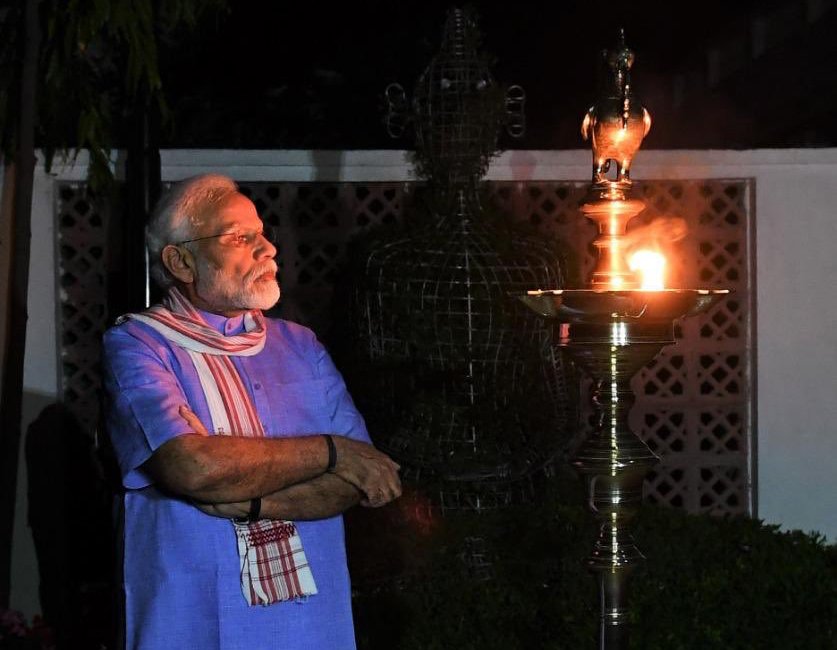
    PM Modi lighting a lamp on the occasion of 9 minutes at 9 pm on 5th April, 2020
    PM Modi lighting a lamp on the occasion of 9 minutes at 9 pm on 5th April, 2020

    Our PM does not care to do that, leaving his ministers to do the talking. Though, in other cases (where this does not happen, conversely) it would have been great. Not so much when the country is facing a pandemic.

    PM Modi needs to speak up, be more transparent and open – provide timely updates. How much fund has been received so far on the PM Cares account, how much of it is utilized and where? Which states have got how much to fight against this deadly virus? He needs to speak up and provide a ray of hope to those migrant workers who are caught in between and unable to afford a meal a day.

    How are we doing on the testing?

    Pretty bad, still. We are not even testing 0.2 of 1000 people we have. And should have been doing much more testing than what we are doing right now. Also, we have not yet warmed up to the idea of group testing either. In fact, what is so really sad is that you cannot decide to get yourself tested, unless you qualify.

    The Covid19 lockdown should have helped to accelerate the testing, however it has been far less than I anticipated. The country is still struggling with lack of safety equipment for front-line workers like Doctors and Nurses, while Donald Trump has arm twisted humanitarian supply for Hydroxychloroquine, the Malaria drug.

    Interestingly, on 15th of March, India tested only 191 people where as the same for South Korea and US the number was upwords for 5800+ tests in a day! That is a huge number, and given lower population in South Korea, their pace has been marvelous.

    Here is another chart that shows India’s Covid19 tests conducted rate compared to much smaller countries, including Pakistan – and all of them are doing way lot better on per 1000 count.

    Are we already on COVID19 Stage 3?

    If you have read my past article on if India is prepared enough to fight the Coronavirus, then you would already have read what I think about it. Almost 15 days since my article, the ICMR (premier nodal agency that is helping fight Coronavirus) still maintains that we are not yet in Stage 3 of community transmission. However, this is because we are still not testing enough.

    While countries like Germany have started testing for beyond identifying patients cases as well – into the recovered ones and we are yet to scale a huge load up on testing to identify.

    It is becoming increasingly clear that community transmission has been happening in India in various areas and has not been reported largely. The Markaz folks who went back to their native states have showcased it already that community transmissions are taking place.

    So, what is next?

    The government along with states has already decided to extend the Lockdown situation by 14 more days. That means, the lockdown will be continue through 29th April, 2020.

    During this period, Govt. still assumes that parts of the country (by districts) that do not have Coronavirus or have full recovered, will be tagged Green. A color that represents everything is good, and citizens in such areas can go about their normal lives.

    Then, second color category is Orange. Here, the numbers are pretty less and the government believes will not have much of COVID19 impact. Govt will allow movement with limited restrictions.

    And if your area/district is Red, then the lockdown will continue as it is. There is also conversation on adopting the Kerala Model, Rajasthan Model etc.

    Till next post then, STAY SAFE. STAY HOME.

    A word of Thanks to all the front line warriors, especially the doctors and nurses!
    A word of Thanks to all the front line warriors, especially the doctors and nurses!

  • How lockdown looked like around me? Report (Video)

    How lockdown looked like around me? Report (Video)

    This is a quick video tour of Palava under the lockdown. India has been under lock down since last week of March and a lot of service have been disrupted. As Dombivli emerges as the hotspot in around our region, the lock down has become stricter and have a greater endorsement from the police force and other support agencies.

    Strict Lockdown!

    For next three days till 15th of April, vegetables and fruits sales have been banned (rumor has it one COVID19 patient was identified to be working with APMC market) in our locality with grocery shops only allowed to operate to sell Milk and other essential commodity from 5 am to 2:30 pm only.

    Perhaps most damaging are liqour and pan wala stores that people addicted to substances are missing in a big way as they battle their addiction. Kerala, Tamil Nadu and West Bengal are considering opening up the liquor stores. Kerala has the higher amount of suicide cases directly linked to the Coronavirus Lockdown situation.


  • Is India prepared to fight Coronavirus?

    Is India prepared to fight Coronavirus?

    I have always wondered India’s ability to fight coronavirus. You may call me a pessimist, but to date I have been right. Our honourable PM makes an appearance on the TV to speak to all of us about the epidemic Coronavirus. And the best thing he could come up with is to follow something that people started doing across infected countries.

    Updated article available here: 18 days of lockdown report: India fighting COVID19

    Yes, I am talking about clapping and appreciating the warriors at the front of the war against Coronavirus and the curfew. Sure, it is a great sign of homage and salute. It is a small action in fighting coronavirus.

    Many of the medical community came together to urge the government and people at large – they are okay if they don’t stand at their balconies at 5:00 pm on Sunday.  They want you do to something else. And they do have a strong point to make.

    The make-believe WhatsApp University

    In a world where many are praising the government for taking all the right steps in advance, this may not sound right, does it? The slew of WhatsApp forwards are absolutely unbelievable, some downright stupid.

    From NASA claiming that Coronavirus has left India after millions clapped at 5:00 pm in India, Chanting “OM” helping create positive energy that virus cannot stand to gow-mutra (Cow’s urine) can cure Coronavirus. It is absolute disaster when people actually believe it. It is fake news all over again.

    I saw multitude of people who perhaps may be supporters of PM Modi appreciate the move. A trend, like everything else he does, carries in our country. Is it an eye-wash?

    Untameable educated fools

    It is a well know fact that most people who can afford to travel out of India are well educated or rich, or both. We have had many instances, including foreigners, where people who were supposed to be in home quarantine freely roamed around in the country.

    They flew in aeroplanes, traveled in trains and cabs after they arrived back in India. A Kalyan resident even attended a wedding! I for one, felt they should be punished for putting so many lives at risk of getting infected with Coronavirus. And weakening the stand of India in this fight against coronavirus.

    The Janta Curfew

    In perhaps a bizarre announcement, the curfew of 14 hours on 22nd March is in a way a half bake approach. Many people started sharing on social media site as another masterstroke of the Modi government in fight against coronavirus. They spread the fake news that Coronavirus will die in 12 hours outside of a body.

    No one in the world for sure knows how long Coronavirus is alive outside. Best estimate we have is 36 hours – something that is not even conclusive yet.


    However, what the curfew did is exactly opposite in certain pockets of the country. Just look at this tweet for example, people came together, doing garba (folk dance of Gujarat) after clapping and clinging vessels. They came on to streets to fight coronavirus and celebrate it’s death. Stupidity.

    More importantly, I just loved the comment – that a simple message did not get delivered by the great ‘orator’ in 29 minutes of the speech.

    I really do not know what to make of the planning behind it. Janta Curfew plus clapping is perhaps the only two actions PM called out loud. And even that is just too little, too late in our fight against the coronavirus. What the medical fraternity needs is greater support & equipment from the government than an appreciation. The real battle has just started.

    How many do we test for Coronavirus today?

    Today we are testing very limited number of people. A strategy called “symptomatic testing”. So far, India has conducted 12,000 test. This is far less than people flying into India between Jan 15 and March 15 in the fight against coronavirus.

    South Korea, a smaller country in size and population than India, has conducted 2.5 Lakh tests. That is ~4000 tests per million. India, has done only 5-10 per million.

    Female doctor taking a throat culture
    Female pediatrician using a swab to take a sample from a patient’s throat

    India is only testing people who have traveled to a country that has widespread infections. Or have got in contact with any one who has traveled from such a country. Even in this shortlist, the testing is prioritised for those who show Coronavirus symptoms. Dry Cough, Fever, and Shortness of breath.

    It is indeed sad that because as we are testing less, we do not have any information if we have more people infected. The true number eludes us. The exact mistake Italy and US did in the early stages of Coronavirus, but South Korea did not.

    Making hay when the Coronavirus shines

    Many of the medical community came together to urge the government and people at large – they are okay if they don’t stand at their balconies at 5:00 pm on Sunday. But to compel the government to arrange for these necessary arrangements.

    In a very unfortunate development, an investigation by news website Scroll.in has revealed there are irregularities in government‘s plan. As has been anticipated by the medical community, they will soon run out of their supplies and stocks of essentials. These include sanitisers, masks, eye-wear, hazmat coverall suites (PPE), etc. And then, the government favours some manufacturers a bit more than others.

    Pic: Businessman receiving bribe or money bonus from partner client boss at work, bribery in business, corruption or employee reward concept, close up view of hands with envelope.
    It is not a surprise that something amiss is happening when India is looking for fight coronavirus

    In a way, it was expected. We in India know well that corruption, irregularities and malpractices run deep in the country. In a month and half since the first case was reported, the government yet did not place an order for additional PPEs.

    What’s worst? The manufacturers do not know what standards they need to comply to when they manufacture. Yet. They have followed up with the ministry a couple of times, and have not received a response.

    Are we already on Coronavirus Stage 3?

    In a nutshell, yes.

    There is no clear announcement from the government if we are there yet. But a slew of measures announced are in direct correlation with how they are now preparing for eventuality.

    The strain of Novel Corona virus is also known as COVID19 but the final naming designation is SARS-2
    The strain of Novel Coronavirus is also known as COVID-19 but the final naming designation is SARS CoV-2

    The blockage of entire cities, janta curfew etc. are steps taken suggesting that government knows something they are not telling us. Of course, they do not want people to panic. A panic situation is not politically good for them, and they would want to hide their ill preparedness as well. And it is bad for the business in an already battered down economy.

    Coronavirus spreading is defined in various stages. Let’s understand what are the stages.

    Stage 1:

    Getting infected by Coronavirus. Traveling mostly from China or other countries where it is widespread.

    Stage 2:

    Spreading in small numbers when coming in contact with someone who has traveled from such countries and may carry the infection. Also called, Local Transmission.

    Stage 3:

    When it starts spreading across a larger group of people. The multiplier effect can be four times of the previous detected number or more, also called Community Transmission. 

    Stage 4:

    The numbers increase very heavily and the spread is very fast. This stage sees a very heavy increase in count of dead from Coronavirus as well. Starts breaking the back of the Medical and Hospital infrastructure, overall health system and people managing it.

    Stage 5:

    Health system collapses. More people die due to non-coronavirus related diseases/illnesses as health system is unable to sustain itself.

    What’s next?

    The next 7 days are absolutely crucial in the fight against virus. It is important for India to get it’s act together and start preparing for the worst. It is best to stay put in comforts of your home unless you are an essential part of this City’s health infrastructure.

    #Salute to those who are helping fight this endemic.


  • How can Housing Societies stay safe from COVID-19 Novel Coronavirus?

    How can Housing Societies stay safe from COVID-19 Novel Coronavirus?

    Urban Indians live in Housing Societies, and they play a very vital role in managing our surrounding and to some extent, the space up to our doors. So it is imperative, that our housing societies become prepared to face the challenge of Novel Coronavirus or called as Covid-19.

    Crowded Mumbai Skyline - dotted with hundreds of thousans housing societies including slums
    Crowded Mumbai Skyline – dotted with hundreds of thousans housing societies including slums

    Novel Coronavirus is here in India and it has been growing. At the last count, we had 84 Indians and Foreign nationals tested positive. It is high-time we avoid panic, but prepare to stop the spread of COVID-19 before it becomes an endemic in India, even. So here are a sure-shot few ways that can help avoid the spread if anyone in the vicinity has been detected COVID-19 positive.

    An open letter to the Honorable Secretary and Chair Person across many housing societies in India in relation to COVID-19 (Novel Coronavirus)

    How can Housing Societies prepare to avoid COVID-19?
    How can Housing Societies prepare to avoid COVID-19?

    Hello Society Office Bearers, Respected Secretary and Chair Person,

    In light of the Novel Coronavirus (COVID-19) endemic, I propose that all housing societies take a few additional steps in preparedness, more than some that are already taken, to stay safe and stop Novel Coronavirus from spreading further.

    I am sure, as you all are well aware, the situation is not grim at this moment in and around our country yet, however things may be changing fast and hence I recommended the following measures, for your consideration and implementation.

    Stop using Bio-metric Fingerprint readers

    Biometric Fingerprint Readers can spread Coronavirus COVID-19

    Novel Coronavirus spreads with touch as well as sneeze – and it is found to stay alive on varied surfaces for at least six to 12 hours. Bio-metric Fingerprint Readers can spread Coronavirus COVID-19. I am sure this may in the minority not all societies have bio-metric access control.

    However a lot of new housing complexes come with retina scanners or finger print readers to enable access to the doors. Of the two, we should definitely avoid using fingerprint scanners as they require you to touch the reader glass area – thus creating an opportunity for the virus to spread.

    This is applicable to both home and workplaces equally!

    Increase security personnel head count

    Security guard in control cctv room with monitors
    Security guard in control cctv room with monitors

    Common with a lot of societies in India, we often reduce the head count of security personnel  (like in case of our society, two wings get one shared security guard) to reduce costs borne by the society.

    Increasing security personnel right now will ensure you have people to man gates in absence of Fingerprint readers. Also these folks can become your safe-guards to ensure people are checked at the gates for temperature in the event the virus gets spread wide enough.

    A readiness agreement can be discussed with the vendor in the following days so that we can deploy additional manpower at the earliest notice, as and when the situation demands it

    Masks and hand gloves for the house-keeping staff

    Masks and Gloves for House Keeping Staff
    Masks and Gloves for House Keeping Staff

    Of course, the people who clean the society surroundings are the most important people whom you rely on to help save you from Coronavirus (COVID-19). So their well-being is absolutely critical for housing societies.

    Issue masks and gloves for Housekeeping and Security Staff – and instruct them to wear it all the time they are in your premises at the very least, especially since they are exposed more people/places than other residents on average. May be you should secure at least a month’s worth of masks and disposable gloves for them.

    Keep common areas clean and sanitized
    Keep common areas clean and sanitized

    It is absolutely critical for them to be safe, because they can be potential candidates to become super-spreaders of Novel Coronavirus (COVID-19).

    Use Sanitized Toothpicks to press the floor buttons in the elevator

    Sanitized Toothpicks can help stop spreading of Coronavirus when used in elevators
    Sanitized Toothpicks can help stop spreading of Coronavirus when used in elevators

    This is a quick fix used by many or rather every building in China – and it is rather a cheap and a incredibly smart and innovative solution!

    Sanitized toothpicks can be used within the Lift or Elevator so that no one needs to touch the buttons. A toothpick disposal box can be kept inside the lift, which can then be disinfected by the housing keeping staff, and then re-used. The re-use may become necessary if we run out of the supplies, and it is rather easier to disinfect the toothpicks than to go and buy more in the event of calamity.

    Survey the residents if they have visited anyone who may carry Coronavirus!

    Survey the residents
    Survey the residents

    Initiate an survey across residents. Identify if any of them have either traveled recently across infected areas in India or globally. Or if have met someone who did. It will help identify need to perform disinfecting on such floors and respective elevators in the wing.

    Have enough sanitizing agents in stock

    Stock sanitizing agents (chemicals) in your society
    Stock sanitizing agents (chemicals) in your society

    You can only disinfect your society if you have enough sanitizing agents (chemicals) available in your stock room. It will be prudent for you and your society to stock such agents to help you in worst case.

    Buy infrared temperature detection guns

    Infrared Temperature Reader Guns used to detect fever, one of the Novel Coronavirus symptoms
    Infrared Temperature Reader Guns used to detect fever, one of the Novel Coronavirus symptoms

    Ordering at least one temperature detecting Gun in advance may be a good idea (at least I think). Either we secure it from a vendor, or buy online. Here is a link to a highly rated one that is available on Amazon that costs around 6000 Rupees: https://amzn.to/38QjFtB (affiliate link)

    Effective Communication, stop fake news and rumors

    Communicate and stay informed of updates on Coronavirus
    Communicate and stay informed of updates on Coronavirus

    Clear, timely information and action will help reduce panic among the residents. Always follow the official communication from the Government and stop relying on news shared on WhatsApp. In today’s time, it is imperative that each society has a WhatsApp group of its own residents.

    Use this group to ensure that no fake news or rumors are spread. If found, have them invalidated and correct information shared. Ensure you do maintain a vigil on how and what news is shared among the residents.

    Ensure you or the administrators share regular and timely communication updates with the residents.

    Don’t forget the tenants

    Dont-forget-tenants
    Don’t-forget-tenants

    In many societies, there is less vigil on tenants generally. Some may not even keep a track of tenants. And this could be a loophole that would send Coronavirus visiting a house next to you.

    Have a list of all tenants, their contact details etc. And if possible, if they have traveled from places suspected to spread coronavirus.

    Take special note and care for elderly and people with existing illness

    Taking care of vulnerable and elderly
    Taking care of vulnerable and elderly

    They are the most vulnerable lot to Novel Coronavirus, and will need special care. Novel Coronavirus is only known to fatally impact those who have pre-existing diseases or are old (lower immunity). Have separate set of instructions (I have not seen anyone doing it to date) for vulnerable, communicated.

    It is important that such a communication is shared as this can save lives.

    I hope, wish and pray that we won’t have to do all of the above. However it is in the best interest of our society. I would encourage that we are prepared to protect our families and friends. We all can fight together in case COVID-19 does strike your area or city as a whole.

    Thank you,
    Hemal Shah

    I will update this article as and when new information is made available. So be sure to subscribe to updates on this site.

  • Is it wise to upgrade to the new Tigor 2020 BS6 – full detailed analysis & review

    Is it wise to upgrade to the new Tigor 2020 BS6 – full detailed analysis & review

    It is the first time I am writing anything remotely suggesting that I own a TATA Tigor. I did the Tata Tigor media event way back in February 2017 before the eventual launch of Tigor in the market, and that is when I fell in love with the car. When I went into the market to buy a car for myself, the decision was already made – if there is no other car that excites me then it will be the Tigor.

    The all new Tigor 2020

    New Tata Tigor 2020 edition
    New Tata Tigor 2020 edition

    Tata launched the all new Tigor 2020 edition in January earlier this year. It is a comprehensive update under the hood, and hence the price has also seen an increase. Ever since the launch, I have been drooling over the updates and have been getting weird thoughts. One of the biggest factors for me has been the new safety features and the BS6 engine.

    Tata Tigor 2020 BS6 Safety Features over Tigor 2018 BS4

    The new 2020 Tata Tigor BS6 has significant upgrades over 2018 one. One of the most prominent is the safety area, where they have improved body structure and have changed the design to comply with the pedestrian safety norms that will be live in India from April 2020. A bonus is a confirmation from the Global NCAP, where the car scored 4* rating (I wish it had 5* like the Nexon and Altroz) – which is much better than its direct competition – the Maruti Suzuki Desire and Hyundai Accent.

    1. New front look, with pedestrian safe design
    2. Driver & Co-driver seat belt reminder (Tigor XZA 2018 has only driver seat belt reminder)
    3. Improved crash structure (4* NCAP rating)
    4. Rear parking sensors with Camera (I had camera and LCD unit installed after market, Tigor XZA 2018 only got sensors)

    Digital & Infotainment

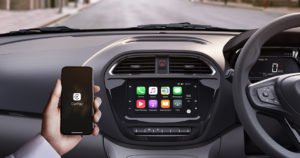
    In the Indian market today, if there is an infotainment system to beat – it is the ones that comes along with all Tata cars. The Harman + JBL speaker system with the infotainment produces the best sound among all other cars in this sub-20 lakh price range. With the 2020 Tigor BS6, you get an upgraded 7″ infotainment system. Agreed, the touch screen may not be the best, however, is as functional as many other cars in the market.

    The new Tigor also comes with:

    1. Digital Instrument Cluster (my XZA has analogue with MID)
    2. 7” Infotainment system (my XZA 2018 did not have 7″ LCD infotainment system, it had the normal 2 din)
    3. Voice Command Recognition (via Infotainment)
    4. Image & video playback (via Infotainment)
    5. Android AutoTM & Apple CarPlayTM connectivity (via Infotainment)
    6. Call rejection with SMS feature (via Infotainment)
    7. Incoming SMS notification & readout (via Infotainment)
    8. 8 Speaker surround sound (earlier models had 6 speakers)

    Other Tigor 2020 Features

    Few other noteworthy features that are added to the Tigor are the Auto fold mirrors and push start/stop button. DRLs or Daytime Running Lamps is also a welcome addition. To add a big of the zing and sportiness, Tata Motors has given Altroz’s flat-bottom, full horn spread steering wheel to Tigor as well.

    In the earlier XZA version that I own, Tata Motors had ignored adding the Climate Controlled A/C system – which now has been given to the XZA+ variant. The only let down I had was when Tata Motors decided to change the interior seat fabric from Black to Grey. They could have gone with Beige color though – it would have made the car look even more premium.

    1. Auto Fold mirrors
    2. Push Star/Stop button
    3. Day time running Lamps or DRLs
    4. Flat bottom steering wheel (with improved honk press spread, same is available in Altroz)
    5. Shark fin antenna
    6. Climate Control A/C
    7. Dual tone interiors (2018 Tigor XZA had black, which I prefer better than the grey in 2020 Tigor)

    New Tata Tigor 2020 Colours

    I personally liked the new colours offered on the Tata Tigao 2020 model more than on the new Tigor 2020 model. Though the new Deep Red and Daytona Grey are among the best options in my view from what Tata Motors is offering though. I would have loved if Tata Motors offered the Flame Red and Victory Yellow from Tiago on Tigor as well – image how much fun it would look on the Tigor as well! Of course, looks and colour choices are subjective.

    The new Bharat Stage (BS6 or BSVI) compliant Engine

    One of the biggest reasons for the slew of new car launches or upgrades is due to the Bharat Stage regulations. The Ministry of Transport, Roadways and Infrastructure decided to skip BS5/BSV regulations altogether and decided to jump from BS4/BSIV to BS6/BSVI. This marks a significant step in terms of helping the environment become cleaner and government accelerated its implementation in spite of voices from the industry crying foul.

    1.2 Litre Revotron Petrol Engine is a three pot motor, which is BS6 compliant
    1.2 Litre Revotron Petrol Engine is a three-pot motor, which is BS6 compliant

    Diesel Engine

    Tata’s have decided not to upgrade the sweet 1.0L 3-cylinder Revotroq diesel engine that used to come with Tigor. It is one of the most fuel-efficient motor in its class (nearly competing with Maruti’s 1.3 based on Fiat’s MultiJet engine). So, the all new Tata Tigor 2020 variant is only available with the upgraded 1.2L Revotron Petrol engine.

    Upgrading to new Tigor

    I was wondering what the cost will be to upgrade my existing 2018 Tigor XZA with the new 2020 Tigor XZA+ so did a quick calculation to find out feasibility. Here it goes I bought Tigor XZA 2018 in June 2018 costed me ₹7.36L (included accessories worth ₹24K). The new Tigor XZA+ 2020 will cost me ₹8.92L. The cost difference between old OTR and new OTR is ₹1.56L

    The exchange value (max) that I have (est. valuation, not physical) is ₹6.20L (June 2018, XZA, 30,000 KMs 1st owner, owner single driver, excellent condition). Exchange value for my Tigor suggested by the Showroom evaluator is only ₹3.2L – which is a far cry for a car that costed me ₹7.36L with 30K Kms on board and 18 months of ownership.

    If I get to sell my existing Tigor for anywhere around ₹6.20L, I would pay ₹2,72,000 more (plus interest that I paid on loan over last 18 months).

    I have already completed 30K+ kms on the Odo in last 18 months, car has P2P subscribed for 2.5 more years, insurance renewed till June 2020. I will only have 45K KMS more warranty left, approximate part replacement + service costs pegged at ₹30,000 for next 18 months (on the conservative side). Tyres will have to be changed in next 10K Kms, so that is additional ₹20K. Net expense increase then will be around ₹2L if I take about 70K off in future expenses for next 18 months including warranty costs. Interest cost was at ₹80,000 till next month’s EMI.

    In summary…

    If I must look at the value for ₹280,000, there is a lot to get so it still makes sense, but not overwhelmingly so. It now all depends on how good a valuation I can get for my car in exchange. Since it is a facelift but new launch, the new car will not come with any exchange bonuses or discounts – however if you wait for long to exchange Tigor with Tigor, then your old car’s valuation is only going to be less.

    Since it is a Tata, valuation will always be an issue, won’t get similar valuation like the tin-cars Maruti makes till the market improves. It suffers from Tata’s image of the rickety Indica’s and cheapest car Nano. It is the rigidity with which people refuse to accept the change at Tata Motors the reason I am very vocal about them. I own a Tigor, have had issues with it and have it resolved. I am incredibly happy with the ASA now from when I had bought my car. For a company to show that much of an improvement over 18 months is huge.

  • Weekend Getaway at Herb Farm in Igatpuri

    Weekend Getaway at Herb Farm in Igatpuri

    [vc_row][vc_column][vc_column_text]It had been two months since my last outing to Goa, and in between then and now I have already started feeling stressed out. Due to the hectic working hours and constant travel to work and back, I needed a break. For people who live on the central lined (railways) suburbs beyond Thane, Lonavala and Igatpuri are often the quick break spot. I have been struggling to decide between the expensive Lonavala (yep, demand was higher during Diwali) and scarce Igatpuri/Bhandardara belt.

    The idea was to get to a place and relax with nothing to be done actually. And if it was closer to nature, it will be a bonus. I was constantly seeing the option for Herb Farm in Igatpuri for quite a while, with no rooms available for booking on online sites. I prefer Cleartrip to book hotels more often than not, unless the place isnt listed there.


    Room view outside, The Herb Farm, Igatpuri

    Room view outside, The Herb Farm, Igatpuri

    So when I was just scanning for hotels on Friday, suddenly the Herb Farm came up as available at I booked it immediately. I will be traveling with my family to the farm for a quite one-night outing the very next day. Look for the video review below, if you want to skip reading. 🙂


    Natural Igatpuri-Bhandardara

    Igatpuri has been my frequently visited place, be it for breakfast rides or office outings. And every time I had been there, I have enjoyed my time. So much so that I feel that Igatpuri as a place to travel is often not weighted in its worth. In a way, better for people like me who frequent the place.

    Igatpuri is approachable via the Mumbai-Nashik highway from Mumbai, and is a hill station in itself. Surrounded by lush Western Ghats and highest peaks of Sahiyadri range, it is best visited during the monsoons. The approach can be tricky due to heavy rain the region witnesses, however it is experience that you must not miss.


    Outside River and Lake View at The Herb Farm, Igatpuri

    Outside River and Lake View at The Herb Farm, Igatpuri

    I prefer going to Igatpuri because it close, and it is not as crowded as Lonavala, the closest Hill Station to Mumbai. Be it the lush green or the golden brown mountains as the season changes, this place has always lived up to my expectations.


    The Herb Farm at Igatpuri

    Situated just near the highway, Herb Farm is an eco-conscious resort / hotel. If you are traveling from Mumbai, travel about 11 kms after you cross Ghoti junction (you will need to take a U-turn and travel 500 meters towards Ghoti) and the resort is on your left side. The place is visible from far, thanks to the large board. Parking space is ample for the number of rooms available – eight.


    What is really likable about this place is the it offers exclusivity, closeness to the nature and yet be remarkable at their service. The service was really spot on, something that I would expect from a niche hotel provider. The one thing that may irk a lot of you is – this place is vegetarian only. Yep, you heard that right. So all those non-veg aficionados, you may want to change your taste for the weekend.

    Having said that, the food is good and tasty. Overall, the look and feel of this place is a nice fusion between old-world-charm and modern amenities. The place is thoughtfully designed, and does not show any signs of overdoing.


    Swimming Pool

    I really liked the swimming pool though  it is only approx. 5 feet at its deepest and not very big. The quality of water was something I found to be much better than similar sized hotels I have seen around Igatpuri. It is best enjoyed with the kids!


    The swimming pool is lit at night with lights and it is a nice setting if you want to spend the night time near the pool area. You can also lie down and go a star gaze.


    River and surrounding

    The other things that are close by to this place is a dry lake and a river. I know it sounds a bit odd, however the dry lake is something of a bummer that is played right in due to the changing climate. The river though, is accessible but way is through mud and grass. I did try going there, however decided to stop and come back as it was too slippery.


    The hotel is situated right at the highway, so you tend to hear the typical highway noise. Truck and car tires screeching through the road day and night. Add to that, there is the Mumbai-Nashik rail route passing through right next to the highway. You need to be a deep sleeper to be sure, as the sleep quality I felt will not be that great for very light sleeping folks.


    Rooms at the Herb Farm, Igatpuri

    Rooms at The Herb Farm are limited to eight – yes it is a small property. However, they are tastefully designed and named after the herbs. Oregano and Cilantro are the furthest rooms and should be preferred if you are light sleeper. Other rooms are named Dill, Thyme, etc. so you get the drift.

    All rooms are built on rails, and have beach sand play area beneath them. And you have hammocks for each room, if you prefer to lie down outside. You need to climb up the stairs to get to your room and greeted by the faux grass mats, couple of chairs and a tea table.


    Inside, you have one king size bed, and a tea-coffee maker. All rooms offer air-conditioning, and are very neat and clean. The interior design is subtle and a perfectly mixed fusion of old-world-charm with modern fixtures. French windows double up as door. You can lie down and absorb in the view that you can see from your bed. It is the best view to wake up and see in the morning, right from your bed.

    One thing that I might have to put out as a warning though, is mosquitoes. Given it is located near a river and a lake, dry at that, with patches of puddles across, it is bound to be mosquito prone. It is advised that you carry a mosquito repelling creme with you.

    The washroom is small, however the ceiling is made of glass giving the near open-air experience. Of course, the dried leaves and dust on top do give away the glass surface. It still is a welcome change to a typical small bathroom and experience you may well like.


    Experience!

    The overall experience has left a positive impact on me and my family, and it is definitely a place I will consider to stay at, again. The thing is, very rarely you find a place that is neat and modern, yet has the old-world charm blend into a perfect fusion. In my view, the Herb farm at Igatpuri does this to great effect.

    PS: This is not a paid/sponsored post, as it may look like with my generous praise for this place. It is purely my heart felt thoughts after I visited this place.

    [/vc_column_text][/vc_column][/vc_row]